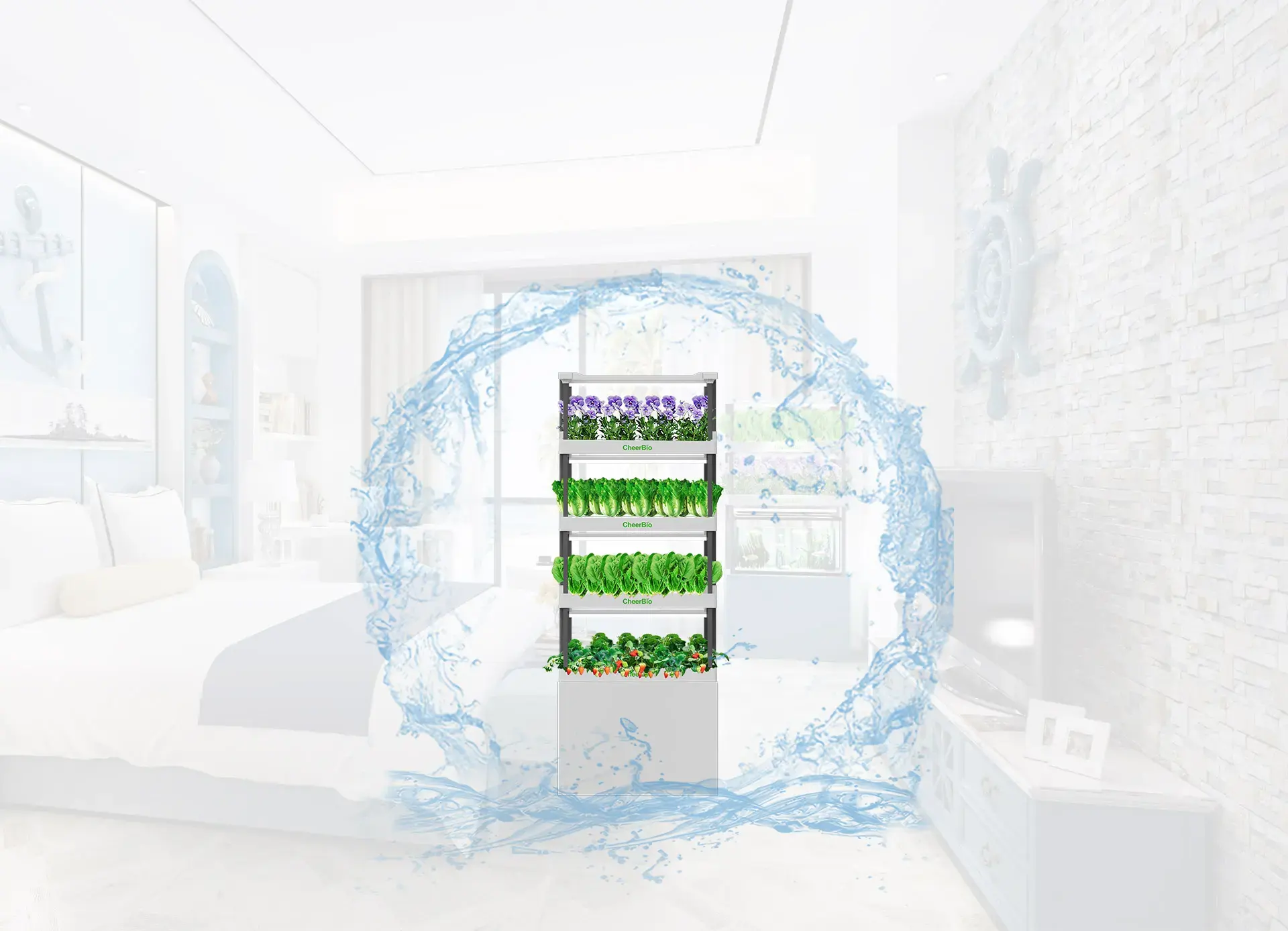
An indoor hydroponic system is a soil-free cultivation method that uses nutrient-rich water and specialized LED lighting to grow plants indoors. Whether you are a home grower or a commercial distributor, understanding the mechanics of a smart hydroponic system ensures higher crop yields, faster growth cycles, and efficient resource management.
Core Components of a Hydroponic Growing System
To understand how these systems operate at peak efficiency, it is crucial to break down their anatomy. A commercial-grade hydroponic setup relies on the seamless integration of several hardware components to simulate and optimize natural growing conditions.
| Component | Primary Function | Maintenance Frequency |
|---|---|---|
| Water Reservoir | Stores the nutrient-rich water solution. | Flush every 14 days |
| Submersible Pump | Circulates water and oxygen to the plant roots. | Clean monthly |
| Full-Spectrum LEDs | Mimics natural sunlight for photosynthesis. | Wipe dust weekly |
| Grow Sponges/Baskets | Supports the seed and root structure without soil. | Replace per grow cycle |
Lionfu Pro Tip: In our lab tests at Lionfu, we found that maintaining a water temperature between 65°F and 70°F increases nutrient absorption rates by up to 20% in our standard indoor hydroponic system models.
How does an indoor hydroponic system work?
An indoor hydroponic system works by delivering a perfectly balanced oxygen and nutrient water solution directly to the plant roots. Utilizing a built-in automated pump and full-spectrum LED grow lights, a smart hydroponic system mimics optimal outdoor conditions, allowing plants to photosynthesize and grow up to 50% faster than soil-based methods.
The Cultivation Process
- Seeding and Germination: Seeds are placed into soil-free grow sponges (like rockwool or peat) and inserted into the system’s baskets.
- Nutrient Delivery: The automated pump cycles the water-nutrient mixture over the root zones, ensuring they are fed without becoming waterlogged.
- Automated Light Cycles: The smart controller manages the LED lights, typically running a 16-hour on, 8-hour off cycle to maximize vegetative growth.
- Harvesting: Because the roots exert less energy searching for food, the plant directs all its energy into foliage and fruit production, leading to a much faster harvest.
Lionfu Pro Tip: Our technicians often see new users over-saturate their grow sponges during the seedling phase. We recommend letting the smart hydroponic system’s automated ebb-and-flow cycle manage the moisture to prevent early root rot.
Benefits of using an indoor hydroponic system
The primary benefits of using an indoor hydroponic system include year-round cultivation, zero reliance on weather, and significantly reduced water usage. Furthermore, a hydroponic growing system eliminates soil-borne pests and diseases, ensuring a cleaner, pesticide-free harvest that appeals heavily to health-conscious consumers and commercial buyers alike.
Hydroponics vs. Traditional Soil Farming
| Metric | Indoor Hydroponic System | Traditional Soil Farming |
|---|---|---|
| Water Consumption | Uses up to 90% less water | High water runoff and evaporation |
| Growth Speed | 30% to 50% faster | Standard seasonal growth rates |
| Space Efficiency | Highly compact, vertical capability | Requires wide, horizontal land |
| Pest Control | Minimal risk of soil-borne pests | High risk, often requires pesticides |
Lionfu Pro Tip: Our technicians often see that commercial growers underestimate the space-saving benefits. By stacking our smart hydroponic system units vertically, you can triple your crop yield per square foot compared to traditional greenhouse layouts.
Maintenance tips for an indoor hydroponic system
Proper maintenance of your indoor hydroponic system requires bi-weekly water changes, regular pH testing, and monthly cleaning of the water pump. Keeping the hydroponic growing system sanitized prevents algae buildup and ensures that the nutrient solution flows unobstructed, maximizing the lifespan of the equipment and the health of your plants.
Step-by-Step Maintenance Routine
- Daily Inspection: Verify that the LED lights are turning on/off according to the timer and check the reservoir water level indicator.
- Weekly Testing: Use a digital meter to test the pH (ideal is 5.5 to 6.5) and the Electrical Conductivity (EC) to ensure nutrient levels are adequate.
- Bi-Weekly Flush: Drain the old nutrient water and replace it with fresh water and a newly mixed nutrient solution to prevent salt buildup.
- Monthly Deep Clean: Remove the submersible pump, disassemble the casing, and scrub the impeller to remove any root debris or algae.
Lionfu Pro Tip: Our technicians often see pump failures caused by microscopic root debris. We highly recommend installing a secondary mesh filter over the intake valve of your hydroponic growing system to double its operational lifespan.
What is the minimum order quantity (MOQ) required to qualify for wholesale pricing?
To qualify for our tiered wholesale pricing on an indoor hydroponic system, the standard minimum order quantity (MOQ) starts at 50 units. We structure our bulk purchasing options to support distributors of all sizes, offering deeper discounts as order volumes increase for our premium smart hydroponic system lines.
Wholesale Tier Breakdown
| Distributor Tier | Minimum Order Quantity (MOQ) | Estimated Wholesale Discount |
|---|---|---|
| Starter Distributer | 50 Units | 15% off MSRP |
| Volume Partner | 200 Units | 25% off MSRP |
| Container Load | 500+ Units | 40% off MSRP |
Lionfu Pro Tip: Our technicians often see new distributors struggle with inventory management. We advise starting with a mixed pallet of 50 units to test different smart hydroponic system models in your local retail market before committing to full container loads.
Do you offer white-labeling or drop-shipping services for authorized distributors?
Yes, we provide comprehensive white-labeling and drop-shipping services for our authorized distributors. You can customize our indoor hydroponic system with your brand logo, custom packaging, and tailored user manuals, while our drop-shipping program allows you to fulfill individual customer orders directly from our manufacturing warehouse without holding inventory.
Distributor Service Options
- White-Label Customization: We modify the physical smart hydroponic system chassis to include your company’s logo via silk-screen printing or laser etching.
- Custom Packaging: We design and print retail-ready boxes and instruction manuals that reflect your brand identity.
- Direct Drop-Shipping: You make the sale on your e-commerce platform, and our logistics team picks, packs, and ships the hydroponic growing system directly to your end-user.
Lionfu Pro Tip: Our technicians often see that distributors who utilize our white-labeling service for the hydroponic growing system experience a 40% increase in brand loyalty and repeat customer purchases compared to those selling generic, unbranded units.
Whether you are looking to optimize your personal indoor harvest or scale a profitable distribution business, investing in a high-quality smart hydroponic system guarantees efficient, year-round growing success.