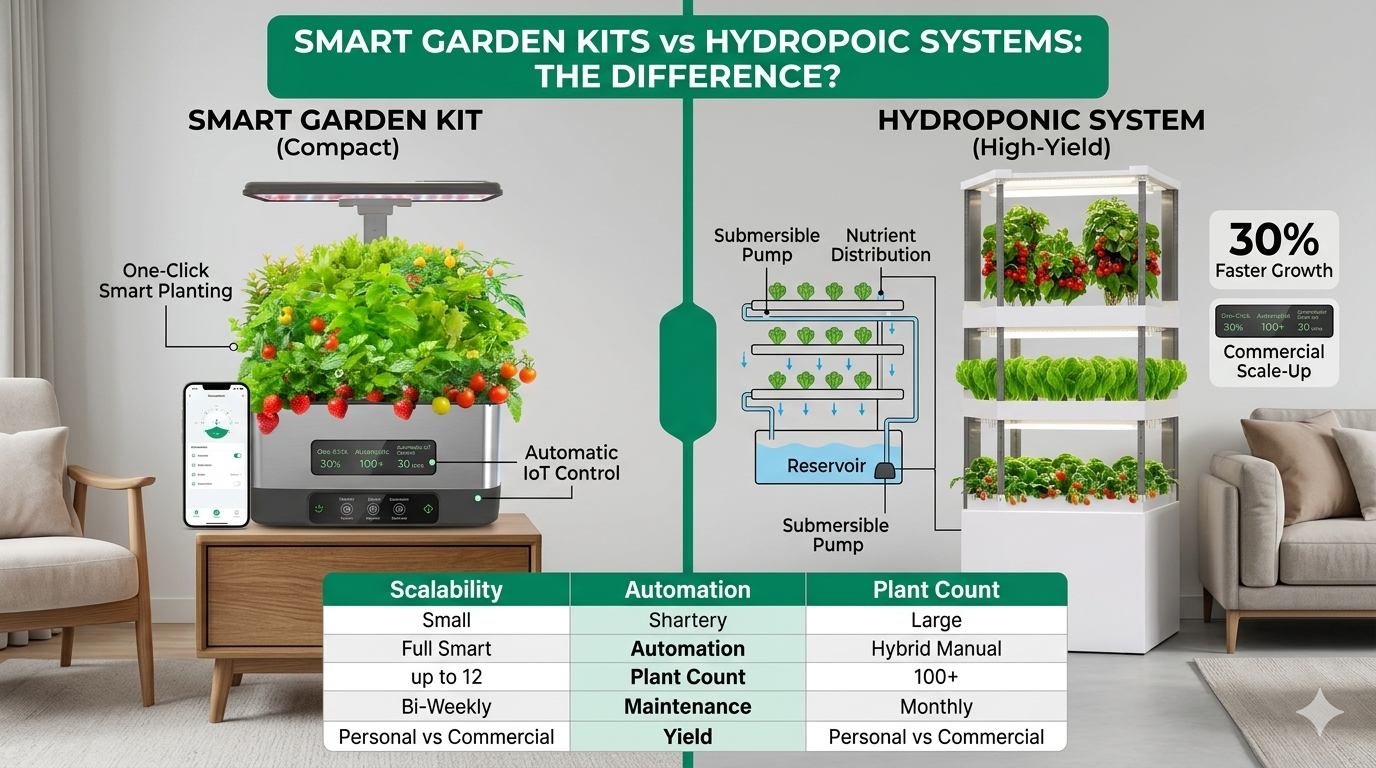
The main difference is that a smart garden kit is a specific, all-in-one type of indoor hydroponic system designed for ease of use. A general hydroponic system is a broader category of soil-free growing methods that offers more customization and scalability but requires more manual setup and management.
What is a Smart Garden Kit?
A smart garden kit is a self-contained, automated indoor gardening unit designed for ultimate convenience. These devices, often a type of smart hydroponic system, manage lighting, watering, and nutrient schedules automatically, making it incredibly simple for beginners to grow herbs, salads, and flowers indoors with minimal effort.
Automation & Control: Integrated sensors and timers manage the LED grow lights and water pump. Many models offer smartphone app integration for monitoring and control, sending alerts when water or nutrients are low.
All-in-One Design: These kits are sold as complete packages. They typically include the main basin, an overhead LED light panel, pre-seeded pods, and proprietary nutrient solutions, eliminating the need to source components separately.
User Experience: The core focus is on a “set it and forget it” experience. Assembly is minimal, and the automated systems handle the complex horticultural tasks, making it perfect for users with no prior gardening knowledge.
[Insert video explaining smart garden kits]
What is a Hydroponic System?
A hydroponic system is a broad term for any method of growing plants without soil, using a mineral nutrient solution dissolved in water. This category encompasses a wide range of setups, from simple do-it-yourself (DIY) buckets to large-scale commercial agricultural operations, offering high levels of control and scalability.
Core Methods: Hydroponics includes various techniques, such as Deep Water Culture (DWC), where roots are submerged in a nutrient solution; Nutrient Film Technique (NFT), where a thin stream of water flows over the roots; and Ebb and Flow, which periodically floods and drains the root zone.
Customization & Scalability: Unlike all-in-one kits, an indoor hydroponic system is highly customizable. Users select their own grow lights, pumps, growing media (like rockwool or clay pebbles), and nutrient formulas. This allows for setups of any size, from a single plant to a full-room operation.
User Involvement: These systems demand more hands-on management. The user is responsible for mixing nutrient solutions, regularly monitoring and adjusting pH and nutrient concentration (EC/PPM), and maintaining the equipment.
[Insert video showing different hydroponic system types]
Key Differences: Smart Garden Kits vs. Hydroponic Systems
The primary distinctions come down to convenience versus control. A smart garden system prioritizes an effortless user experience by automating key processes within a closed ecosystem. A traditional indoor hydroponic system provides the user with complete control over every variable, allowing for greater customization, learning, and potential scale, but at the cost of a steeper learning curve and more hands-on work.
| Feature | Smart Garden Kit | Hydroponic System |
|---|---|---|
| Ease of Use | Plug-and-play, fully automated | Requires manual setup and monitoring |
| Customization | Very limited; uses proprietary pods/nutrients | Highly customizable; user chooses all components |
| Initial Setup | Minimal; typically under 15 minutes | Varies; can be complex and time-consuming |
| Scalability | Not scalable; fixed size | Highly scalable from small to commercial |
ClearFilter Pro Tip: We find the ideal choice hinges on your primary goal. If you want fresh herbs on your countertop with zero hassle, a smart garden is unbeatable. If your ambition is to learn the science of plant growth, experiment with different crops, and potentially scale your garden, building a traditional indoor hydroponic system provides a much richer, hands-on experience.
Pros & Cons Comparison
| Feature | Smart Garden Kit | Hydroponic System |
|---|---|---|
| Learning Curve | ✅ Very Low | ❌ High |
| Convenience | ✅ Extremely High | ❌ Low (Requires manual work) |
| Upfront Cost | Moderate to High (for the features) | Low to Very High (depends on scale) |
| Flexibility & Control | ❌ Low | ✅ Very High |
| Plant Variety | Limited to smaller plants/proprietary pods | Virtually unlimited |
| Footprint | Small, countertop-friendly | Varies from small to very large |
Conclusion
Choosing between a smart garden kit and a general hydroponic system depends entirely on your goals, time commitment, and desire to learn.
A smart garden system is the perfect entry point for anyone seeking the joy of indoor gardening without the complexity. It’s an appliance that grows food, ideal for busy individuals or families who want fresh herbs and salads on demand.
A traditional indoor hydroponic system is for the hobbyist, tinkerer, and aspiring grower. It offers a rewarding journey into the science of horticulture, providing complete control and endless possibilities for customization and expansion. While it demands more effort, the potential yield and knowledge gained are significantly greater.
FAQ
1. Is a smart garden a hydroponic system? Yes, most smart garden kits are a type of smart hydroponic system. They use hydroponic principles (water and nutrients, no soil) but package it into an automated, user-friendly device.
2. Can I use my own seeds in a smart garden kit? Often, yes. While companies encourage you to buy their pre-seeded pods, many also sell “grow anything” pods that contain a growing medium but no seeds, allowing you to plant your own.
3. Which system is better for growing larger vegetables like tomatoes or peppers? A traditional hydroponic system is far better for larger plants. Smart garden kits are typically too small and have lights that aren’t powerful enough for large, fruiting vegetables, which require more root space and intense light to thrive.